

A practical guide to removing PSTN dependency while keeping your options open for cloud calling platforms, including Microsoft Teams Phone, Webex Calling and Voice AI.
The PSTN switch-off is no longer just a telephony issue. It’s an AI readiness decision.
As the UK retires analogue and ISDN services, businesses must decide how they replace PSTN connectivity. But the choice you make now won’t just determine how calls are handled today. It will shape how easily you can adopt cloud calling platforms, automation, and Voice AI in the future.
There isn’t a single right approach. Some organisations will replace their phone system with a cloud platform. Others will keep their existing PBX and switch the underlying connectivity to VoIP (SIP trunking).
The right option depends on how much change you want to introduce, how critical continuity is to your business, and how much flexibility you want to preserve for the future.
This guide explains the main PSTN switch-off options, who each is suited to, and how to remove PSTN risk without locking yourself out of future capabilities.
Before we explore the options, let’s clarify what’s actually being switched off, as the terminology can be confusing.
The PSTN is the public telephone network. Historically, there have been two main ways of accessing it, both of which are being withdrawn as part of the UK switch-off:
- Analogue lines: the traditional copper-based service used for single phone lines
- ISDN: digital services typically used by businesses, including ISDN30 and ISDN2 (BRI)
These are different access services, but both are being removed as part of the UK’s transition to all-IP voice.
Already familiar with the background? Skip straight to: Your options for switching off PSTN/ISDN.
Key UK PSTN Switch-Off Dates
The UK transition to all-IP voice is happening in phases, with the following key milestones:
- September 2023: Stop-sell of new PSTN and ISDN services
- 2024–2025: Large-scale migration of existing customers and exchange withdrawals
- December 2025: Target date for withdrawal of PSTN and ISDN services, completing the move to all-IP voice
- By early 2027: Final legacy network decommissioning and clean-up completed (provider-led timelines vary)
In practice, the PSTN switch-off means businesses must replace traditional phone line connectivity with IP-based services. How you do that is a choice.
Some organisations will replace their phone system entirely, while others will keep their existing PBX and switch the underlying connectivity to VoIP and SIP.
Increasingly, businesses are also factoring in how today’s decision will affect their ability to introduce Voice AI-driven services, such as voice bots, automated call triage, and intelligent routing later on, without another major telephony project.
What We Mean By Voice AI and Why It Matters to Your PSTN Decision
Voice AI refers to software that can answer, understand, and route phone calls using natural language, without requiring callers to navigate keypad menus or wait in a queue.
In most organisations, it’s introduced to handle specific, predictable call scenarios rather than replacing the phone system as a whole. Common examples include:
- A voice bot answering inbound calls out of hours, handling queries such as opening times or delivery updates
- An AI receptionist that greets callers and routes them to the right team based on what they say, rather than fixed IVR menus
- A voice bot handling simple, high-volume enquiries before passing the call to a human when needed
In these scenarios, the AI typically handles specific calls on specific numbers, working alongside your existing PBX or cloud calling platform rather than replacing it.
You may not be planning to introduce Voice AI today. However, many organisations expect to explore capabilities like this over time — whether to improve customer experience, manage call volumes, or extend service hours.
What’s often underestimated is how much today’s PSTN switch-off decision influences this later. The way your phone numbers are connected, routed, and tied to a phone system will determine how easily you can introduce services like Voice AI in the future, whether that’s a simple configuration change or another complex migration.
That’s why the PSTN switch-off is more than a technical exercise. What you choose now can make all the difference later.
Download Your PSTN Switch-Off Toolkit
A practical guide for UK SMBs to move off PSTN with minimal disruption, and stay flexible for cloud calling and Voice AI.
Your Options For The PSTN Switch Off
While the PSTN switch-off is often treated as a connectivity problem, the option you choose also determines how easily you can adapt your calling setup later – whether that’s moving to a cloud platform, supporting hybrid environments, or introducing services like Voice AI when the time is right.
To help you decide which option is best or your business, you need to think about whether you want to change your phone system or keep it and change what connects it.
For most businesses, the decision comes down to how much disruption you’re prepared to take on right now, and how much flexibility you want to retain for the future.
Some organisations use the switch-off as a trigger to replace their phone system entirely and move to a cloud-based platform. Others are happy with their current PBX and want the simplest way to keep it working by replacing the legacy phone lines with modern IP-based connectivity.
Increasingly, businesses are also factoring in how today’s decision will affect their ability to introduce AI-driven services later on, such as voice bots, automated call triage, or intelligent routing, without another major telephony project.
Below are the two most common approaches businesses take. Neither is “right” or “wrong”. The right option depends on your appetite for change, how critical continuity is, and how future-ready you want your calling environment to be.
- Keep your existing phone system (PBX) as is, but add a VoIP gateway (converts the analogue / ISDN to VoIP), allowing you to then connect your PBX via a SIP trunk.
- Replace your phone system with a new cloud phone platform (Hosted VoIP / Cloud PBX). And there is a lot of choice out there.
Option 1: Keep your existing phone system (PBX) and add a VoIP Gateway to leverage SIP trunking
This option lets you keep your current phone system exactly as it is, while replacing the old phone lines it relies on.
Instead of calls coming in over traditional PSTN or ISDN lines, your phone system is connected to the network using your internet connection. A small piece of equipment called a VoIP gateway sits between your phone system and the network, translating calls so your existing phones can continue to work as they do today. This connection is known as SIP trunking.
From a day-to-day point of view, very little changes. Staff use the same handsets, reception and call routing work the same way, and customers dial the same numbers. What changes is the underlying connection, which moves away from legacy phone lines onto modern IP-based services.
Many businesses choose this approach because it removes PSTN/ISDN dependency without forcing a phone system replacement, making it one of the least disruptive ways to handle the switch-off when the existing system is still doing its job.
Key considerations:
- PBX viability: Confirm that your existing phone system (PBX) is still supported and reliable for the expected remaining life of the system.
- Gateway selection: Ensure compatibility between your phone system and the VoIP gateway. Common enterprise-grade gateway vendors include Cisco, AudioCodes, Sangoma, and Oracle.
- Call flow limitations: Core call routing will remain largely unchanged and constrained by the capabilities of the legacy PBX phone system.
- Connectivity reliance: External calling will depend on internet connectivity and power for SIP services, reducing traditional PSTN resilience. Planning for outages becomes more important than with traditional phone lines.
- Scalability and future path: Growth and new features may be limited by the PBX, so this approach is often best viewed as a transitional step rather than a long-term solution.
AI Considerations if keeping your PBX:
While this approach solves the switch-off, it does little to prepare your environment for Voice AI. Any AI-driven call handling typically has to be bolted on to the PBX, if it’s possible at all, and is constrained by the limitations of the legacy system. As a result, introducing AI later often means revisiting your telephony architecture again.
Option 2: Replace your phone system with a new cloud phone platform (Hosted VoIP / Cloud PBX)
This is a full platform change, not just a PSTN/ISDN fix. You replace your existing phone system with a hosted cloud phone service.
A hosted cloud phone service replaces your existing phone system with software that runs in the cloud, rather than on equipment in your building.
Instead of calls being handled by an on-site PBX connected to phone lines, calls are delivered over your internet connection and managed by the provider’s platform. Users typically make and receive calls using desktop or mobile apps, web browsers, or IP desk phones, and call handling (reception groups, queues, voicemail, out-of-hours rules) is configured through an online portal.
What are the choices?
There are a wide range of cloud-based phone services on the market, covering the needs of organisations from small SMEs through to large enterprises. Many businesses are also choosing to leverage technologies they already use in-house when replacing their phone system.
For example, organisations that are Microsoft-centric might adopt Microsoft Teams Phone, allowing users to make and receive calls using the same Teams client already deployed across desktops and mobile devices. Other well-known enterprise options include Cisco and Zoom, which also offer cloud-based telephony and collaboration platforms.
For organisations that prefer a more traditional, dedicated phone system experience, there are specialist providers such as 3CX that can be considered.
Key considerations:
- Call flow rebuild: You will likely need to rebuild and thoroughly test call routing rules, including hunt groups, overflow handling, and out-of-hours logic.
- User impact: Even small changes can disrupt critical functions such as reception, sales desks, and customer service teams if not carefully planned and communicated.
- Connectivity dependency: Cloud-based calling relies on resilient internet connectivity and local power; outages can directly impact voice services.
- Network readiness: Review internal network capacity, quality of service (QoS), and Wi-Fi coverage to ensure they can support voice traffic reliably.
- Project scope: Phone system replacements often take longer than expected, particularly where there are multiple sites, legacy numbers, or complex call flows.
AI Considerations if migrating to a cloud calling service:
Many cloud platforms now offer AI features or integrations, but these are typically tied closely to the platform itself. This can accelerate AI adoption — but it can also create new dependencies, making it harder to change platforms or experiment with alternative AI services later without another migration.
Recommended Approach For Most Businesses
For many organisations, the priority is to remove PSTN/ISDN risk without disrupting staff or customers.
Keeping your existing PBX and switching the underlying connectivity can achieve this, but connectivity alone only solves the switch-off.
It doesn’t address how easily you can adapt call handling later, whether that’s introducing cloud users, supporting hybrid environments, or layering in Voice AI incrementally.
In most cases, it simply replaces one fixed dependency with another, meaning a future move to Microsoft Teams, Webex, or another cloud calling service may still require a major rework.
The smarter approach is to introduce an abstraction layer between your numbers and your phone systems.This means your numbers are no longer tightly tied to a single platform.
This allows you to keep your PBX today, while making it far easier to change how calls are handled later — whether that’s routing numbers to cloud users, introducing hybrid models, or adding Voice AI when the time is right.
Why Callroute Makes The Difference
Callroute is an award-winning platform that lets you keep your existing PBX and call handling exactly as they are today, while moving your phone numbers onto a modern, independent platform built for long-term flexibility.

Unlike other providers that tie your numbers to a specific phone system or calling product, Callroute introduces an abstraction layer that separates numbering and routing from the platforms that handle calls.
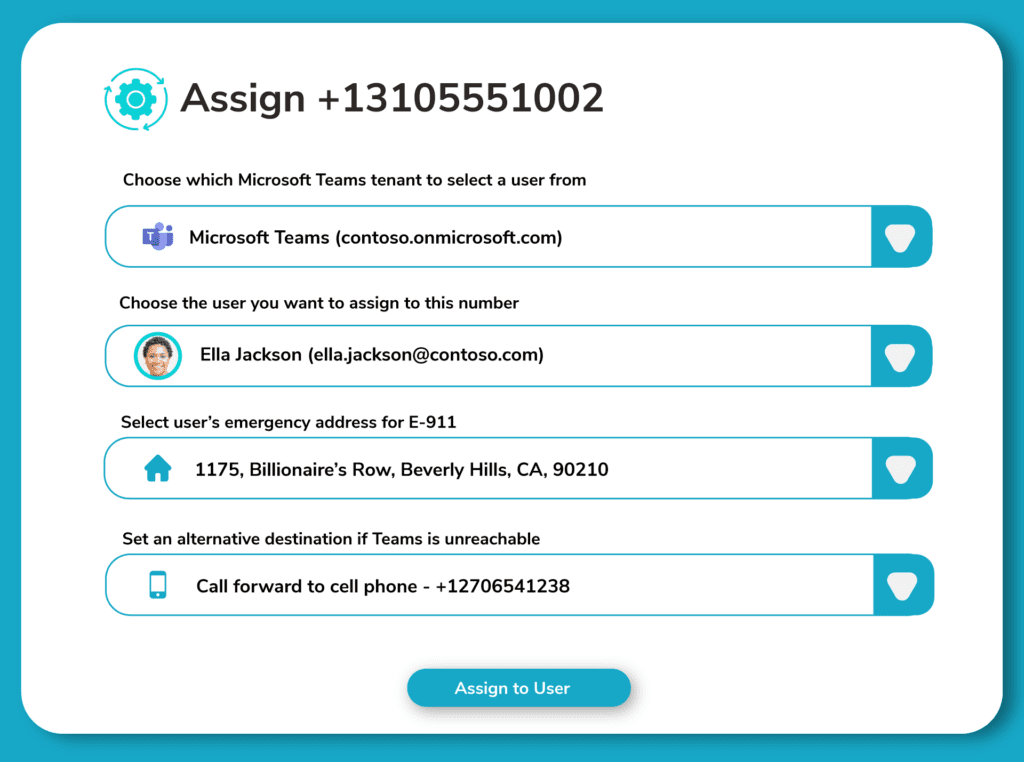
- Your PBX today, with no disruption
- Microsoft Teams Phone in the future, when you choose
- Voice AI or chatbot services alongside Teams or your PBX
- Other cloud calling platforms, if your strategy changes
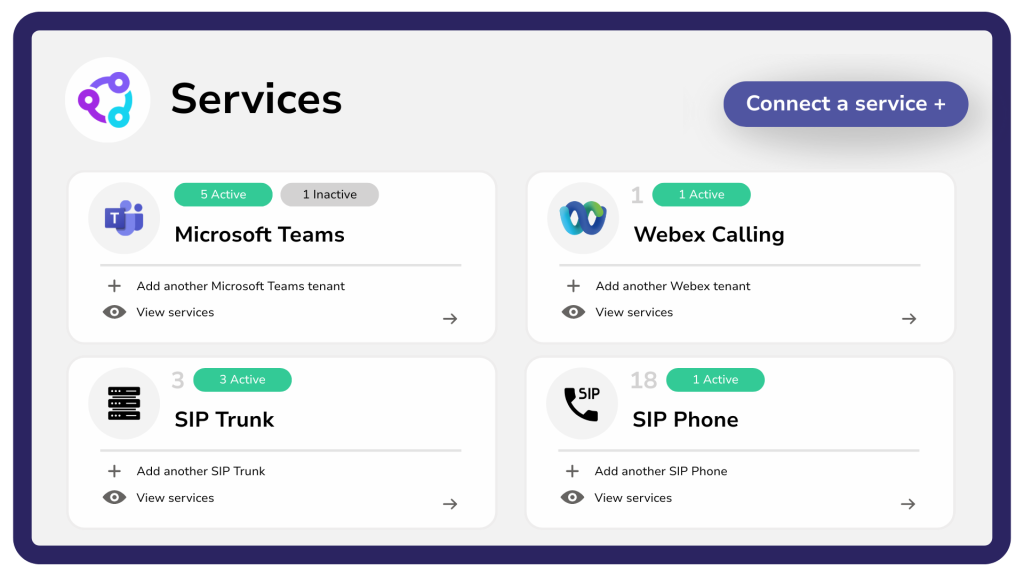
An Example Customer Journey (PBX → Microsoft Teams Phone → Voice AI)
A typical customer starts by moving their phone numbers onto Callroute while keeping their PBX exactly as it is. Users notice no change, customers dial the same numbers, and PSTN risk is removed.
As Microsoft Teams adoption grows, selected numbers — such as office users or specific departments — are routed into Teams Phone, while others continue to use the PBX.
Later, when the business is ready to explore Voice AI, certain inbound numbers are connected to a voice chatbot to handle common enquiries or out-of-hours calls. This works alongside both Teams and the PBX, without replacing either.
No renumbering. No rework. No dead ends.
What This Delivers
- Minimal disruption now: no rip-and-replace, no retraining
- Control: simple number management and fast routing changes
- Future flexibility: PBX today, Teams tomorrow, Voice AI when ready
- Lower risk: remove switch-off pressure and avoid vendor lock-in
The result is a calling setup that won’t need to be rebuilt each time your strategy evolves.
Take the Safest Route Off PSTN
If you want to remove PSTN risk now while keeping your options open for your chosen phone system and future AI initiatives, Callroute gives you a single switch that keeps your options open.
Book a short consultation and we’ll:
- Review your current PBX and number estate
- Identify the lowest-disruption route to your preferred cloud calling service (Teams Phone or alike)
- Show how Voice AI can be introduced later without another migration
👉 Switch once. Stay flexible. Book your Callroute consultation today.
Still Assessing?
Download the PSTN Switch-Off Migration Toolkit: Navigating The PSTN Switch-Off – A Practical Toolkit For PBX, Cloud Calling and Voice AI
A practical, step-by-step guide to removing PSTN risk, planning your migration, and keeping your options open for cloud calling and Voice AI.
✔ Checklists
✔ Readiness framework
✔ Real-world migration models
Download your PSTN Switch-Off Toolkit
A practical guide for UK SMBs to move off PSTN with minimal disruption, and stay flexible for cloud calling and Voice AI. Get your FREE copy!